Whiteout by Ragnar Jónasson—A convincing and uniquely Icelandic thriller dripping with tension and suspense.
Whiteout is the fifth book I’ve read by best-selling Icelandic author Ragnar Jónasson, who reliably delivers absorbing and suspense filled thrillers with complex plots and multi-layered characters every time. I’ve had this book on my to be read list for a while now, but only just got to it. That’s because it’s a book I purchased. And I always give priority to reading and reviewing the advance reader copies I receive from publishers over titles from my personal collection. But having enjoyed Jónasson’s books so much in the past, I was eager to get to this one. Whiteout is the fourth book (in publication order), or fifth book (chronologically) in Jónasson’s Dark Iceland series.
I’ve commented on the settings of his books before, but I’ll mention it again since Jónasson puts such a strong emphasis on it. The setting—the bleak portions of the natural Icelandic landscape, the bitter cold with snow and ice, the dark winters, and the summers with the midnight sun—becomes almost a character in its own right. That all combines to contribute a sense of foreboding and tension from the moment you start reading. Like Jónasson’s other books, beyond the desolate setting, this novel includes brutal crimes in an otherwise quiet and outwardly safe community, a tortured protagonist, and a strong plot with multiple complex threads and unexpected twists.
on January 1, 2020 (first published October 20, 2013)
Genre(s): Mystery Thriller, International Police Procedural, Icelandic Noir
ISBN 9781910633892
Pages 240
Dark, chilling and complex, Whiteout is a haunting, atmospheric and stunningly plotted thriller from one of Iceland’s bestselling crime writers.
When the body of a young woman is found dead beneath the cliffs of the deserted Icelandic village of Kálfshamarvík, police officer Ari Thór Arason uncovers a startling and terrifying connection to an earlier series of deaths, as the killer remains on the loose…
Two days before Christmas, a young woman is found dead beneath the cliffs of the deserted village of Kálfshamarvík.
Did she jump, or did something more sinister take place beneath the lighthouse and the abandoned old house on the remote rocky outcrop?
With winter closing in and the snow falling relentlessly, Ari Thór Arason discovers that the victim’s mother and young sister also lost their lives in this same spot, twenty-five years earlier.
As the dark history and its secrets of the village are unveiled, and the death toll begins to rise, the Siglufjordur detectives must race against the clock to find the killer, before another tragedy takes place.
As a lover of mysteries, thrillers and crime fiction, I knew I had found a new must-read author after reading my first Ragnar Jónasson novel, Blackout. I liked the main character of his Dark Iceland series, Ari Thór Arason, from the moment I first met him in Blackout, and enjoyed meeting him again in Whiteout.
Ari Thór is the quintessential tortured protagonist, a police officer with a painful past. In this fourth book in the series, he is back with his partner Kristin, who is pregnant with their first child. He also teams up once again with his former boss and mentor, Tómas, now assigned to the Serious Crimes Department of the Reykjavik police force, for an investigation. But Ari Thór and Tómas don’t appear until Part Two of the book.
The book opens with a brief but chilling prologue where a little girl falls from a cliff to her death. Then in the first chapter we meet a young woman in her thirties, Ásta Káradóttir, who has returned to visit Kálfshamarsvík and the childhood home she left at age seven. There she renews old acquaintances with people still living in the house that Ásta and her family once lived in when her father was a light house keeper on the Skagi peninsula. There she occupies her old room in the attic, and things take a sinister turn.
In Part One, Jónasson offers us some interesting insight—in snippets—from Ásta about her childhood, when she lived with her family in the house beside the lighthouse. We can’t quite work out why Ásta has returned to the house for a visit, since it seems clear the place holds no happy memories for her. And more than once, Ásta questions whether she should have come.
I appreciated that Jónasson dives right into the action in Part Two. Tómas phones Ari Thór two days before Christmas and tells him there has been a sudden death at Kálfshamarsvík and the local police are too busy with another situation to handle the investigation. Tómas tells him he is coming north from Reykjavik and needs Ari Thór’s help on the case. Tómas assures his junior colleague that the death looks like a suicide investigation they should wrap up before Christmas, but then mentions something ominous about a backstory. In response to Ari Thór’s questions for clarification, Tómas mentions “terrible things that happened to the mother [of the victim] and her daughters” in the past. With the heightened suspense, there’s no question of a lagging plot. This sets the book’s pace and engages the reader from the start as the action moves to Kálfshamarsvík.
Although we realize we’re yet to learn more about Ásta and the ominous past that Tómas mentioned, everything seems straight-forward as the two police officers begin the investigation. But slowly things change and therein lies the strength of Jónasson’s storytelling style. It’s not only about the action. He offers us further snippets of information, providing deeper insight that calls into question the assumptions we’ve made about the death. The plot is twisty and Jónasson, as he always does, throws in a surprise towards the end that he masks well.
As with the other books in the series I’ve read, Jónasson’s major strengths continues to be the relatability of his characters and the ease of his storytelling. I appreciated how he expanded Ari Thór’s arc by continuing to develop his character. My favorite part of this book was unexpected, as I found myself captivated by the relationship dynamics unfolding because of Kristin’s pregnancy. She accompanies Ari Thór when he travels to Kálfshamarsvík to connect with Tómas because she has some personal business to attend in the area. This allows us to see how the pregnancy affects their relationship and insight into how Ari Thór feels about becoming a father considering his own difficult past. Ultimately, this was a satisfying read with a lot of surprises thrown in—many of which I did not see coming. I easily rate it as another 5-star read by one of the best crime fiction writers in the business.
I purchased the copy of Whiteout used for this review, representing my honest opinions.
Shaking Hands with the Devil by Bryan J. Mason—A satirical tale from a master wit at his quirky, provocative best.
I’ve been remiss in not posting this review of Shaking Hands with the Devil by Bryan J. Mason sooner. It certainly offers something quite new as far as serial killer novels go. As soon as I started reading, I fell in love with the way Mason wrote this book—from the point-of-views of Clifton Gentle, the serial killer—who’s resplendent with quirks and a smidge of mad, and the annoyingly arrogant but inept DCI Dave Hicks.
‘WE ARE ON THIS CASE LIKE A BONER FIDO BLOODHOUND… AND MY MEN ARE BARKING AT THE LEASH’
In this darkly comic novel, Clifton Gentle is an ordinary man without much to distinguish him. Not much, that is, apart from being a serial killer who is leaving bits of his young male victims scattered around North London . DCI Dave Hicks is the larger than life policeman determined to catch him. His attempts to find ‘the nutter’ through a combination of spoonerisms, personal abuse and a belief that something will turn up don’t go well. All that turns up are yet more body parts.
In a sleazy London dogged by growing squalor and an IRA bombing campaign in the last days of Margaret Thatcher’s premiership, the gruesome murders spur an over-the-top media and merchandising frenzy.
The hunt becomes an increasingly personal one and a race against the clock as Clifton, Dave Hicks, a would-be victim, and a copycat killer each try to uncover what – or who – they hold responsible for their own problems.
If you enjoy your serial killer novels with a healthy dose of dark comedy, Shaking Hands with the Devil by Bryan J. Mason is the book for you. I very much enjoyed this book. There’s a definite sense of wit and lightness in it, but it reminds us that our impressions of people may not always be correct, that people’s personalities come in various shades of grey and can often surprise us. This isn’t a whodunit, as we meet villain, Clifton Gentle, our serial killer, on the opening pages. The plot centers on whether the largely inept, and arrogantly and pompously boastful Detective Chief Inspector Dave Hicks, can identify and arrest the suspect, leaving body parts strewn willy-nilly around his patch in London.
What I liked most about Shaking Hands with the Devil was the same thing I like about the movie Dumb and Dumber. While I rarely like slapstick comedy, in the film, the two imbecilic best friends in the film are so relentlessly stupid that it’s laugh-out-loud hilarious. In this novel, instead of two imbecilic best friends, we have Clifton Gentle and Dave Hicks, two quirky men who in their own rights are so relentlessly half-witted that it’s laugh-out-loud hilarious. The deeper into the book we go, the more absurdly cerebrally challenged they reveal themselves to be.
There’s a sense of predictability here and I think readers will clearly see where this book’s going, but Mason also throws in some surprises. I felt the plot probably wasn’t as robust as I typically like, but whatever its flaws, the book gives you no chance to get bored. The characters are uniformly interesting and Mason does a fine job with offering the reader some great background texture and layers of complexity. That helps us understand why the main characters are who they are and behave as they do.
Shaking Hands with the Devil, while a work of fiction, is a bit of a study in culture and society. Bryan J. Mason wrote this novel in the late 1980s, “but reluctantly put it away in a drawer after his agent narrowly failed to get it published.” As you read the book, you notice immediately the story is set at a time before the stifling contemporary onset of political correctness that demands we all conform to accepted language and practices that don’t risk offending the political sensibilities of the overly sensitive.
Pegasus Publishing published Shaking Hands with the Devil on September 30, 2021. I received a print copy of this book from the publisher used for this review, representing my honest opinions.
The Dark Hours is the fourth book in the Renée Ballard series by Michael Connelly, best-selling crime fiction author of thirty-six novels.
The Dark Hours is the fourth book in the Renée Ballard series by Michael Connelly, best-selling crime fiction author of thirty-six novels, most notably those featuring LAPD Detective Hieronymus “Harry” Bosch. I’ve read and enjoyed all of Connelly’s novels. Like many Connelly fans, the Bosch books remain my favorites, but Connelly is another author who never writes a bad book. So, I give all his novels high marks. He always delivers intriguing thrillers with complex and often-flawed characters. While I enjoyed the previous three Ballard books, The Dark Hours is certainly my favorite so far. I found myself invested in Ballard’s fate from the first page and intrigued by the unfolding plot.
Besides great characters, another of Connelly’s strengths is the settings of his books. He demonstrates an uncanny ability to give readers a sense of “place” from the novel’s start. Within the first few pages, the reader feels they are right there in Los Angeles or, concerning books from other series, wherever the action occurs. This book is no different in that regard. Still, from the beginning where we find Renée Ballard and Detective Lisa Moore sitting in a parked police car beneath an overpass outside a homeless encampment waiting tensely for “the annual rain of lead” from revelers welcoming in the new year with a barrage of gunfire, this book focuses less on the where and more on the fast-paced what.
A brazen and methodical killer strikes on New Year’s Eve and LAPD Detective Renée Ballard and Harry Bosch must join forces to find justice for the victim in a city scarred by fear and social unrest, in the new thriller from #1 New York Times bestselling author Michael Connelly.
There’s chaos in Hollywood at the end of the New Year’s Eve countdown. Working her graveyard shift, LAPD Detective Renée Ballard waits out the traditional rain of lead as hundreds of revelers shoot their guns into the air. Only minutes after midnight, Ballard is called to a scene where a hardworking auto shop owner has been fatally hit by a bullet in the middle of a crowded street party.
Ballard quickly concludes that the deadly bullet could not have fallen from the sky and that it is linked to another unsolved murder—a case at one time worked by Detective Harry Bosch. At the same time, Ballard hunts a fiendish pair of serial rapists, the Midnight Men, who have been terrorizing women and leaving no trace.
Determined to solve both cases, Ballard feels like she is constantly running uphill in a police department indelibly changed by the pandemic and recent social unrest. It is a department so hampered by inertia and low morale that Ballard must go outside to the one detective she can count on: Harry Bosch. But as the two inexorable detectives work together to find out where old and new cases intersect, they must constantly look over their shoulders. The brutal predators they are tracking are ready to kill to keep their secrets hidden.
I like lead character Renée Ballard. No, she isn’t Harry, but she shares many of Bosch’s traits. But filling the shoes of the venerable Harry Bosch, Connelly’s most iconic character, is a big ask. Yet like it or not, since the author has aged Bosch in real time in the novels, Harry’s days are numbered. So, Connelly is passing the torch to Ballard, who will be the future of Connelly’s Bosch franchise. I know from experience, writing a novel from the point of view of a person of the opposite sex is challenging. But I feel Michael Connelly pulls it off with ease and sensitivity. I suspect the reason for this is that, as Connelly revealed in a 2019 interview with the Los Angeles Times, he based the LAPD detective Renée Ballard character on real-life LAPD detective Mitzi Roberts. Perhaps that is why Ballard seems so genuine and realistic.
Our introduction to Renée Ballard in this novel comes on New Year’s Eve 2021, as she and another female LAPD detective are hunkered down in their city ride beneath the Cahuenga underpass just before midnight, braced for the inevitable gunfire that erupts in Los Angeles every year to welcome in the new year. Both detectives are in uniform in response to a department-wide tactical alert, a status LAPD employs on occasions like New Year’s Eve with all hands on deck and every officer in the department in uniform and working twelve-hour shifts. The suspense builds from the first page as we expect the detectives will soon speed to a call somewhere in Hollywood. Connelly also throws in “Added to that, the Midnight Men were out there somewhere” producing immediate curiosity in the reader’s mind about who the Midnight Men are and what it has to do with Ballard.
Renée is obviously a quintessential flawed character. She shares one of Bosch’s flaws in that she is so relentlessly committed to getting justice for victims that she is prone to disregard LAPD policies and defy superiors when she feels they become barriers to accomplishing her mission to protect and serve. And, like Bosch, that often gets her into trouble. Another flaw is Ballard’s inability to move on from a situation where the department treated her unfairly over a sexual harassment complaint she made against a previous supervisor. So, she lives with a chip on her shoulder. This often contributes to the trouble Ballard finds herself in with both supervisors and peers. Many times, her wounds are self-inflicted.
And then there’s the current state of the LAPD and Los Angeles in general. Connelly touches on every aspect of it all—the worsening homeless problem, the defund the police movement, the open animosity toward the police by citizens, civil unrest, and the jarring collapse of morale within the LAPD. In the spirit of self-preservation, many cops have a adopted a turn a blind eye and do as little as possible philosophy to avoid citizen complaints in the highly politicized environment where they know neither the department nor the city has their backs. He adds the pandemic and its lingering effects to the mix. I have no doubt that Connelly has captured the essence of 2021 Los Angeles in this book, a city that appears more like a failed third world country than part of the United States.
I don’t do trigger alerts. The term itself is part and parcel of the disgusting coddling culture that has swept the country over the past four or five years. I say only that any adult who picks up a realistic crime fiction novel should expect to encounter a good amount of violence and this book has its share, including descriptions of violence again women. Interestingly, I recently listened to a talk by Michael Connelly where he acknowledged the violence in The Dark Hours, and explained why he wrote the book the way he did. The violence isn’t gratuitous or meant to entertain. I think after hearing Connelly explain it, that it serves as a stark reminder of the realities that we face living in contemporary society. As someone once said, life is brutal. I don’t think that has ever been truer than it is today.
Ballard and her temporary partner get the call that we expected from the first page, and she is drawn into a shooting investigation that turns out to be a murder, one that we soon learn shares a nexus with one of Harry Bosch’s old open-unsolved cases. Then we learn more about the Midnight Men, a pair of rapists operating in tandem, a case Ballard is already in the middle of investigating. So, like past Ballard books, we follow Ballard’s efforts to get justice for her victims while juggling two cases as she tries to prevent her bosses and colleagues from messing it all up.
The only thing some might find disappointing is we get little Harry Bosch in this book, not nearly as much as in the previous Ballard books. It almost seems like a cameo appearance. But I suppose we must get used to it. And the interaction between Ballard and Bosch we got was great and added much to the story.
The plot is twisty, and Connelly throws in a surprise or two towards the end. And though there’s some justice, we’re not offered complete closure–which was fine with me as I’m excited to see what happens with Ballard in the future.
Little, Brown and Company published The Dark Hours by Michael Connelly on November 9, 2021. I purchased a digital copy of the book used for this review.
The Commandments by Óskar Guðmundsson—smartly plotted and satisfyingly suspenseful series starter that will leave you waiting impatiently for the next book.
Guðmundsson’s brilliantly plotted and satisfyingly suspenseful first book in a series featuring Detective Inspector Salka Steinsdóttir, a strong female protagonist, shows unmistakably that he well deserves a compliment recently received from one of the top bestselling Icelandic authors of crime fiction. Ragnar Jónasson called Guðmundsson “one of the leading new talents of Icelandic crime fiction.” I agree. The Commandments, first published under the title Boðorðin in Icelandic by Bjartur, is Guðmundsson’s debut English translation. I can’t wait for more translations of his books. Having read the novels of many of the best Icelandic crime fiction authors in recent years, I’ll open this review with my opinion that The Commandments is as good as Icelandic crime writing gets.
Genre(s): Detective Fiction, Police Procedural, International Crime Fiction
ISBN 978-1-9163797-7-0
253 pages
Former detective Salka Steinsdóttir finds herself unwillingly pitched into the toughest investigation of her life, just as she returns to the tranquil north of Iceland to recover from a personal trauma.
The victim is someone she had pursued earlier in her career – and had never been able to pin down. Now a killer has taken the law into their own hands and meted out brutal retribution for ancient crimes.
Salka is faced with tracking down the murderer of a stalwart of the church and the community, a man whose reputation stretches deep into the past, and even into the police team tasked with solving the case.
As the killer prepares to strike again, Salka and her team search for the band of old friends who could be either killers or victims – or both.
A bestseller in Iceland, The Commandments asks many challenging questions as it takes on some highly controversial issues.
The distinctive cover of The Commandments suggests that there is a religious theme to the book. It features a cross, the most recognized icon of Christianity. A blood smear forms its transverse bar, and a corroded Roman-era iron nail its upright post. That immediately put me in mind of crucifixion, the method of capital punishment used by the Romans and others in which they nailed the convicted person to a large wooden beam affixed to a post and left them to hang until their eventual death from exhaustion and asphyxiation. Combined with the cross, the title called to mind the Ten Commandments given by God to Moses. So, before I’d opened the book, I assumed there was a religious theme to the book and that perhaps someone had broken the fifth commandment, “You shall not kill.” That assumption proved correct as I started reading, but I soon learned that the fifth commandment wasn’t the only commandment someone broke.
Salka Steinsdóttir is a former police detective and most recently a former civilian crime analyst with the Metropolitan Police CID team in London after she and her husband Eysteinn moved to Britain from Iceland some years previously. We meet Salka after she has returned to Iceland, on hiatus while sorting some difficult marital problems. But when someone brutally murders a local priest in Akureyri, her hometown, members of the short-staffed Akureyri police recruit her to help with the investigation. At first, Salka refuses. Besides her marital problems, she is also back in Iceland because she’s concerned about her aging father, who is in failing health. She isn’t even sure she intends to return to police work after the break. But once she learns the victim is the priest she once investigated for sexual abuse, the murder piques her interest. She agrees to take a look at the crime scene at least and to offer her opinions.
Something I found interesting is we don’t meet Salka, the novel’s main character, until the fifth chapter. That’s unusual since the usually accepted convention is that authors should introduce the main character in the first chapter of a novel, if not the very first page. Some books open with a preliminary first chapter that sets the scene or tone of what’s to come before the main character enters. But I can’t recall ever reading the first four chapters of a novel before the protagonist appears. Yet, the story doesn’t suffer as a result. That’s because Guðmundsson cleverly and effectively used those early chapters to quickly build momentum and suspense by teasing out bits of information to the reader that he then uses to plant questions in our minds that we want to be answered. That keeps us turning the pages.
Despite her earlier reluctance, Salka ends up taking charge of the murder investigation, which candidly came as no surprise. She starts gathering pieces of the puzzle and works out the probably why behind the murder, well before she identifies the who—the murderer. Guðmundsson offers up enough believable suspects to keep us guessing right along with Salka until almost the very end.
Beyond the murder investigation, Salka muses about the dwindling prospects that her marriage will survive the difficulties even though a part of her wants things to work out. Also, she’s distracted by her father’s failing health and a casual romance that entwines her. The book is full of interesting, well-drawn characters. Still, Guðmundsson devotes most of his attention to Salka, revealing a complex, multi-layered—somewhat flawed but fascinating protagonist.
This ambitious Icelandic crime tale will resonate with readers who enjoy fast-paced, suspenseful thrillers that double as legitimate whodunits with a strong female main character who can take care of herself. There is a truly mind-blowing twist at the end, which I never saw coming, something I always enjoy. The Commandments is among the best Icelandic crime novels I’ve read this year, perhaps ever, and I’ve read many excellent ones. Translator Quentin Bates does his usual extraordinary job delivering an outstanding English translation that reads as smooth as glass. Fans of the genre won’t want to pass this one up. It’s that’s good.
Corylus Books Ltd published The Commandments on October 12, 2021. I received an advance reading copy of the book from the publisher used for this review, representing my honest and unbiased opinions.
Genre(s): Detective Fiction, Police Procedural, International Crime Fiction
ISBN 978-1-913394-622
205 pages
I’ve been reading a lot of very impressive international crime novels recently, and Silver Pebbles by Hansjörg Schneider is yet another. A die-hard fan of crime fiction for decades, I’ve purposely expanded my crime fiction reading beyond the borders of my own country. So it delighted me when a publicist for Bitter Lemon Press offered me a copy of this book, and Schneider, a Swiss writer, and dramatist did not disappoint. While Silver Pebbles has elements of a slow-burn crime thriller, it fits best in the police procedural genre, a sub-genre of detective fiction. A police procedural differs from other cop novels. Instead of a single policeman getting called in to solve a crime and doing it alone, an entire squad cooperates to solve the crime using the methodology of detection based on real-life police work. Inevitably certain characters are more interesting or intelligent than others and get more space in a novel, but putting the bad guys away and solving the crime is a team effort.
“An elegant young Lebanese man, carrying diamonds in his bag, is on the train from Frankfurt to Basel – a drug mule on the return journey. At Basal train station, Hunkeler is waiting for him after a tipoff from the German police, but the courier first manages to flush the stones down the public toilets. Erdogan, a young Turkish sewage worker, finds them in the pipes under the station. To him they mean wealth and the small hotel he always wanted to buy near his family village. To his Swiss girlfriend Erika, the jewels signify the end of their life together. She knows that Erdogan has a wife and children in Turkey.
For the courier, finding the stones is a matter of life and death. His employers are on their way to ‘tidy things up’. For Hunkeler the diamonds are the key to finding the people behind the drug deal. They turn out to include, not only the bottom-feeding criminal gangs, but the bankers and politicians very high up the Basal food chain.”
Typically in a police procedural, someone commits murder, and a squad of police detectives gets called upon to find the killer. However, what drew my attention to Silver Pebbles was that it isn’t about a murder but a drug courier transporting a fortune in diamonds back to his employers in payment for the delivery of drugs. That fresh and creative approach is one of the things I liked best about the book. It captured my imagination and made for a more compelling premise than my usual steady diet of murder novels.
As the book unfolds, we first meet a key criminal in the story, Guy Kayat, a young Lebanese man working for a drug cartel as a drug mule and courier. Kayat is on the train from Frankfurt to Basel (a city in northwestern Switzerland on the river Rhine). In his bag, Kayat carries a fortune in perfectly cut diamonds received in payment for a delivery of narcotics which he is couriering back to his cartel bosses. Unfortunately for Kayat, the Swiss police are on to him, thanks to a tip from the German police, and a squad of detectives is waiting on him at the Basel train station. Schneider does an accomplished job painting this character for us. As the story progresses, we learn much about Kayat, why he does what he does, and what motivates him to participate in the drug trade. Once we learn about him, even though he is a criminal, it’s difficult not to feel a measure of sympathy for him.
A few pages later in the first chapter, we meet the main character, Peter Hunkeler, a detective inspector with the Basel police and the detective in charge of the squad tasked with apprehending Kayat and seizing the illicit diamonds. Hunkeler, as the protagonist, gets more space in a novel than his police colleagues, and naturally, we get a more in-depth look at his life than the lives of the other cops involved in the investigation. We see the investigation develop primarily through his eyes. In a real sense, the book often seems less concerned with solving a crime than examining the complex life, motives, strengths, and weaknesses of Hunkeler.
The biggest challenge for some readers of this book might be that the Hunkeler character seems a bit clichéd. After all, he has all the usual flaws one expects from the main character in a novel of the genre. First, he smokes and wants to quit but can’t. Second, Hunkeler struggles with his long past divorce and estrangement from his adult daughter, who remains the most important person in the world to him. Third, the detective inspector is cynical and burnt out. Fourth, he is a maverick and doesn’t get on well with his supervisor, and sometimes he drinks excessively. Finally, Hunkeler has an intimate relationship with a woman he hasn’t married, which he uses mostly for only sexual satisfaction and fulfillment of his emotional needs.
I get it. Crime novel characters must have flaws to appear like real people. As I know from personal experience, policing is a stressful job, no doubt about it. But not so stressful that every single cop hits the bottle the moment their shift ends. Yes, many police marriages don’t always survive, and divorces happen. But cop marriages can be as strong as anybody else’s. It’s one of the things that can help a police officer cope with the stress. Unfortunately, at least in the opinion of readers not devoted to the genre, crime fiction writers don’t always spend enough time pushing out from safety zones of the genre conventions. They believe that’s why we end up with tropes and clichés.
Alternatively, those like me who are devoted to the genre aren’t particularly bothered by reliance on the usual conventions, even if they might agree that sticking to them results in tropes and clichés. We sort of expect that from a police procedural. And from an author’s perspective, sticking to the conventions still sells books. Just consider an American super-star of cop novels, Michael Connelly, whose Harry Bosch is in the pantheon of all-time great police detectives. If you know much about Bosch, you know he shares all the same flaws with Hunkeler.
To be fair, there is far more to Hunkeler than the predictable flaws we’ve come to expect from police detective main characters. He possesses characteristics that make him unique and multi-layered. Examples include his political and social world views and his disdain for capitalists and politicians, many of whom Hunkeler regards as the true criminals while acknowledging their wealth and positions makes them virtually untouchable. Also, while Hunkeler enforces drug laws, he feels a high degree of sympathy for drug addicts. All in all, I find Hunkeler a compelling, multi-faceted, and believable character.
As much as I liked Hunkeler, the character in the book which most captured my attention and I like most is Erika, the Swiss girlfriend of the Turkish sewage worker, Erdogan, who eventually finds the discarded diamonds in a sewer pipe beneath the Basel train station.
Erika might be considered a only a minor character in the overall scheme of the novel. She is a single, childless, middle-aged woman, past her prime, who works as a supermarket cashier and desperately clings to the relationship of mutual convenience that she shares with Erdogan. Yet it is with Erika I believe Schneider’s expertise with drawing realistic, believable, and complex characters shows through most brilliantly. Moreover, the crafting of Erika is a virtuoso performance. We feel immediate empathy for Erika and sympathy for her difficult life while at the same time feeling astonishment upon learning she is a woman of grace, character, strength, and wisdom.
If you’re unfamiliar with the works of Hansjörg Schneider, as I was before reading this book, I think it fair to say that stylistically, Silver Pebbles reads quite like a Henning Mankell Wallander novel. Even those who haven’t read Mankell have likely seen the popular films based on his Wallander character. Silver Pebbles isn’t a whodunit. Both the police and the reader know who the criminals are and what they’ve done out the outset. The story is about the systematic attempts by the police to solve the crime by bringing the bad guys to justice and how the criminals try to get away. The book has its suspenseful, edge-of-your-seat moments, but at times the pace of the story lags as we wait for something to happen, some catalyst to reignite the action. However, that is the nature of the police procedural, which seeks to mirror the realism of actual police investigations that play out similarly. The police do not solve crimes in an hour, as television dramas portray.
I found Silver Pebbles a gripping and entertaining read and came away impressed with Schneider’s obvious and considerable talent as a crime writer. He is the author of several highly acclaimed plays and the bestselling Hunkeler crime series, with ten titles published. The Basel Killings, the first in series published in English, was awarded The Friedrich Glauser Prize, Germany’s most prestigious crime fiction literary award. Silver Pebbles is the second book in the series to be published in English. I found not a single awkward passage in the book, revealing that translator Mike Mitchell did an admirable job with the translation. Those of us who enjoy reading novels from international authors first published in other languages always appreciate that. If you’re a devoted fan of detective fiction and police procedural novels, you’re sure to like this book. I truly loved the ironic denouement. The resolution was both appropriate and most satisfying.
Bitter Lemon Press will publish Silver Pebbles from February 22, 2022. I received an advance reading copy of the book from the publisher used for this review, representing my honest and unbiased opinions.
A Stranger From the Storm by William Burton McCormick—is an engaging, fast-paced historical mystery with plenty of surprising twists.
New novella from Author William Burton McCormick, a Shamus, Derringer, and Claymore awards finalist whose fiction regularly appears in Ellery Queen’s Mystery Magazine and Alfred Hitchcock’s Mystery Magazine.
The year is 1900. The port city of Odessa on the Black Sea is being terrorized by a brutal killer called the Specter. With five people already dead, the murderer promises more.
One family, the Karadopoulinas, run a boarding house. Sisters Tasia and Eleni feel certain the killer is a scarred, shambling Londoner who took lodging with them one night during a thunderstorm. Furtive and threatening, Henry Humble, stalks Odessa’s labyrinth of interlocking courtyards and foggy docks at night, armed with weapons and skeleton keys.
As the body count rises, so do the questions…
I don’t read a lot of historical fiction to include historical mysteries. So candidly, A Stranger From the Storm is not a book I’d likely have picked up to read on my own, even though the summary piqued my curiosity mildly. But I accepted the book as it was offered to me along with McCormick’s KGB Banker, and I’m so pleased I agreed to read it. This novella allowed me an entirely different view of McCormick’s writing, which I found intriguing and showed me that he is not only a skillful storyteller but also a versatile writer.
On July 9, 1900, shortly before midnight, twin fifteen-year-old sisters Tasi and Eleni are at home alone on a stormy night waiting for their mother, Maia Karadopoulina, to return home to the boarding house they live in and that Maia operates. Suddenly, they encounter a most peculiar man, an Englishman named Mr. Humble, in this fast-moving historical mystery novella from William Burton McCormick (KGB Banker), set in Odessa*, the third-largest city in Imperial Russia and the country’s second most important port, after St. Petersburg, at the time.
* Odesa is the modern preferred transliteration from Ukrainian.
Humble inquires about lodging for at least a fortnight (two weeks), and the Karadopoulina girls allow him into the parlor to await the arrival of their mother. She alone makes all the decisions on letting the rooms. When Maia gets home and before she learns of Mr. Humble’s presence, she tells her daughters there has been another murder in the Slavic quarter. A fiend prowling the quarter has claimed his sixth victim, all little children. In letters penned to the local newspapers, someone claiming to be the murderer uses the moniker the “Specter.”
Once Tasia remembers to tell her mother they have a prospective lodger, Maia speaks to Humble. She agrees to rent him a bottom-floor room, they settle on the price, and Mr. Humble takes up residence.
As time passes, a series of strange events cause Tasi and Eleni to increasingly suspect that their odd, eccentric lodger may well be the murderer, perhaps the Specter himself. Then something happens that makes them certain of it. So, they begin to investigate. What could go wrong? Quite a lot, actually.
While my first William Burton McCormick book, KGB Banker, both impressed and entertained me, this one is quite a different type of story, but one I found just as enjoyable to read. A novella, A Stranger From the Storm, is a quick read simply because of its length, considerably fewer pages than that of a full novel. But the fast-paced plot makes it seem an even speedier read.
McCormick does an admirable job of capturing and holding the reader’s interest from the opening chapter. The story unfolds from the points of view of the two fifteen-year-old sisters, Anastasia “Tasi” and Eleni Karadopoulina. The setting, Odessa on the Black Sea in 1900, when the city was still an important part of the Russian Empire and before the start of the revolution in 1905, was fresh and intriguing. McCormick capably gives readers a feel for what living in the city might have been like during that period. In addition, I felt the prose perfectly mirrored the period.
Something I found captivating about the two main characters, Tasi and Eleni, is that the deeper I got into the book, the more I forgot they were only fifteen-year-old girls as they seemed far older. That feeling was not at all inconsistent with the period setting of the book. No offense to contemporary teenagers intended, but fifteen-year-olds in 1900 bore little resemblance to today’s teenagers. From a very young age, parents and society imposed far more responsibility on children in those times than is now the case in our age of helicopter parenting. Thankfully, I’m not old enough to have grown up in that period. Still, even the children of my generation grew up with far greater responsibilities and consequently possessed considerably more maturity and life experience as teenagers than those of today. That’s what parents and society expected and required of us. It saddens me that so many parents today give so few responsibilities to their children and expect so little in the way of maturity from them. In my opinion, they do their children a grave injustice by hindering their children’s growth as individuals on the difficult journey towards adulthood. I mention this only to offer an example of how well McCormick did the job of providing us an authentic historical feel to the book and depth of characterization.
What I liked best about this book was the imaginative plot and the unexpected but welcome bits of comic relief that I, for one, find far too infrequently in mystery tales. The comedy adds both interest and texture to the story. There were also plenty of unexpected twists along the way to keep the pages turning.
While I don’t read much historical mystery fiction, I am a lifelong fan of Sir Arthur Conan Doyle’s Sherlock Holmes stories. I also enjoy reading some of the better modern Sherlock Holmes retellings that have grown popular since the expiration of the copyright on Doyle’s iconic detective character. So, I think it fair to say I’m capable of recognizing quality historical fiction and put The Stranger From the Storm firmly in that category.
For those who enjoy reading historical mysteries with a Victorian-era vibe, The Stranger From the Storm is a well-told, engaging story that is an entertaining read you’re sure to enjoy.
The Stranger From the Storm was published by Mannison Press, LLC, and the book is available from November 4, 2021.
I received an advance copy of the book used for this review, representing my honest and unbiased opinions.
Rick Bishop, a former cop and lazy Honolulu private investigator who specializes in divorce investigations, reluctantly agrees to help his love-struck best friend, Joe Rose, track down a mysterious girl named Elle Palmer. Rose met the woman briefly on a moonlight stroll on a Waikiki beach. After the fleeting romantic encounter, Palmer vanished the same evening without a
trace. Rose believes he is in love with the woman and that she is in grave danger.
Bishop begins his investigation apathetically, but when he meets the wealthy and powerful Hawaii pineapple magnate Derek Ballard, Rick grows more interested in the case. When he spots a photo of the woman Rose wants him to find in Ballard’s office, Ballard explains the woman in the photo is his former fiancé, Elle Palmer, who committed suicide nearly forty years ago. As he continues to dig, Bishop discovers the girl on the beach was actually Kate Weaver, the niece of the long-deceased Elle Palmer. Rick also learns Weaver bears an uncanny resemblance to her dead aunt and appears in various places around Honolulu, claiming to be Elle Palmer while wearing the same ivory-colored formal dress her aunt was wearing the night friends and relatives last saw her alive at a party in 1982.
The plot thickens once Rick uncovers the motivation behind Kate’s bizarre impersonations of her dead aunt’s ghost. Weaver believes her aunt didn’t commit suicide but that Derek Ballard murdered her in a jealous rage. Kate has traveled to Honolulu from California to expose Ballard as her aunt’s killer. She pretends to appear as Elle Palmer’s ghost as a ruse aimed at garnering enough publicity to encourage the Honolulu authorities to reopen the decades-old investigation into her aunt’s death. Bishop decides to help Weaver get justice for her aunt after realizing she truly is in grave danger. Unfortunately, Derek Ballard intends to keep his dark secrets buried by shutting her up by any means necessary. Rick also becomes a target when Ballard tires of his interference and hires a Chinatown thug to eliminate him in a staged auto accident. Bishop and Weaver must find out where all the bodies are buried and fast before Ballard buries them.
About the Author
LARRY DARTER is an American writer of fiction, primarily of the mystery & detective and police procedural genres. He is best known for the eight novels written about the fictional Los Angeles private detective Malone. Darter has also written three novels based on the fictional character T. J. O’Sullivan, a female New Zealand ex-pat, working as a private investigator in Honolulu, Hawaii, and two recent police procedural novels featuring the fictional character LAPD homicide detective Howard Drew.
This haunting, hardboiled tale follows detective Frank “Slim Fat” Pinson and his partner as they try to unravel the vexing mystery surrounding a who-done-it drug murder in San Diego.
Frank “Slim Fat” Pinson is your regular hardboiled murder cop—hell, Frank’s a cliché. His wife is dead after jumping from a bridge and he’s a mal-practicing Catholic. He’s tough as nails. Hard as sin. Except not.
When Frank and his partner, “Skinny” Slade Ryerson, catch a cartel murder case, they’re sucked into a black hell of political corruption with ties to Santa Muerte. And Frank—a man who knows himself so well—spins into an epic crisis of faith.
The first detective novel from acclaimed pulp writer Matt Phillips introduces readers to a fascinating character of indefensible fault, immense morality, and incalculable demise.
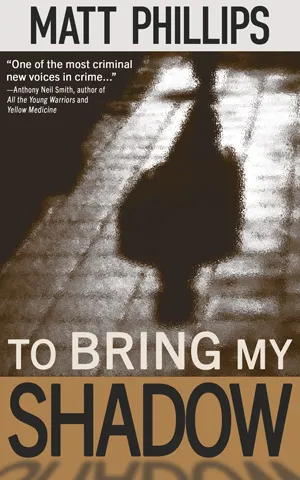
Matt Phillips’ adroitly plotted and nimbly executed hardboiled crime tale kicks off with the discovery of a partially dismembered body inside an oil drum in shallow water beneath the Coronado Bridge. Seasoned SDPD homicide detective Frank “Slim Fat” Pinson and his partner Slade “Skinny” Ryerson catch the case. The scene has particular significance to Pinson. His late wife, Miranda, committed suicide by jumping from the bridge, and Pinson is still reeling from it.
After identifying the victim, Enrico Frederico Pablo Castaneda, the detectives discover he has a Santa Muerte—Saint Death—tattoo over his heart, a known drug cartel tattoo. The grotesque dismembering and the tattoo suggest it was a cartel hit. As their investigation proceeds, Pinson and Ryerson obtain information that leads them to discover the bodies of a San Diego family—Mark Jacoby, his wife, and their fourteen-year-old daughter—buried in shallow graves in east San Diego county near the border with Mexico. The family had been missing for about six months, and the feds had big-footed the case. More painstaking investigation leads the detectives to believe the Jacoby and Castaneda cases are connected. However, the more dirt the pair dig up, the more convoluted the investigation becomes when they learn the murders involve drugs, money laundering, a shady real estate development plan, and political corruption. The investigators are tenacious, but it seems someone is throwing up barriers to shut down their investigation at every turn.
Frank Pinson, the lead character, is cliché. But that’s okay because Frank knows it.
“Don’t worry—the detective knows he’s a cliché.”
Pinson has suffered a recent tragedy. Predictable. He is alone since his wife’s suicide and his estrangement from his son and daughter. Expected. But, Frank isn’t only alone. He is lonely and depressed. Check. He’s 49-years-old and has spent most of his adult life as a cop. Pinson is overweight, out of shape, cynical, and drinks too much. All Anticipated. It’s all hackneyed characterization that crime writers have overused with detective characters to the point it seems worn out, stale, ineffective, and meaningless. But, again, it’s okay that Frank is a cliché, and not only because he knows it. That’s precisely the characterization called for in hardboiled—a tough, unsentimental style of American crime writing that embraces tones of earthy realism in the genre of detective crime fiction. It’s almost a trope of the genre. Also, throughout the book, Phillips cleverly adds layer upon layer to Pinson’s character, and in the end, you forget all about him being cliché. He becomes a complex, realistic, fully developed protagonist. The author did an equally good job fully drawing a host of believable and interesting supporting characters. The characterization is one of the best things about the novel.
I liked that Phillips chose San Diego as the setting for the book. The storied, almost legendary LAPD overshadows every other police department in California (along with most every other police department west of the Mississippi). The status of LAPD means a vast majority of American crime writers choose Los Angeles as the setting for their novels involving police detectives. This is as true of past authors as with contemporary crime writers like Joseph Wambaugh (although I recall Wambaugh used San Diego as the setting for at least one novel) and Michael Connelly (Harry Bosch creator). It’s refreshing to see an author use San Diego, especially for a hardboiled novel. Even before I was aware Phillips is from San Diego, I already knew it from the authenticity of his descriptions of the area. I spent a fair amount of time there during my years in the military and recognized many of the landmarks described, particularly the Coronado Bridge.
True to the book’s genre, Phillips’ concrete, matter-of-fact prose includes profuse profanity and copious crude remarks along with abundant graphic sex and violence. All that is likely too familiar to shock devotees of the genre (like me). But those who aren’t fans of hardboiled fiction might find it all a little jolting and perhaps off-putting. None of it is what I’d consider gratuitous but as much a part of the genre as the vivid but often sordid urban backgrounds and fast-paced, slangy dialogue. But, of course, that shouldn’t surprise anyone since hardboiled crime fiction is a literary style, most commonly associated with detective stories, birthed by pulp magazines.
The hardboiled detective was created in the pages of “Black Mask” magazine in the early 1920s by Carroll John Daly. It’s difficult to find authentic hardboiled crime fiction today, and a pleasure to find a contemporary crime fiction author who writes hardboiled and writes it properly. I found reading While To Bring My Shadow almost like reading a modern-day (without the fedoras) James M. Cain or Mickey Spillane novel. It’s easily the best modern hardboiled book I’ve read since the Harry Kenmare series written by A. B. Patterson, an Australian crime writer and friend of mine who knows first-hand about corruption, power, crime, and sex from his own police career. The murder investigations conducted by Pinson and his partner Ryerson read like a top-tier police procedural.
If you’re a fan of hardboiled or even a devoted reader of well-written crime fiction not easily offended by coarse language, explicit sex, and graphic violence, you should pick up a copy of To Bring My Shadow. From personal experience, I can attest that Phillips does an impressive job of capturing the souls of veteran police officers, most of whom are cynical, but with good reason. They have borne witness to far too many dead bodies, blood and gore, and traumatizing examples of the mindless inhumanity that human beings tend to visit on other human beings. To hang on to their sanity, cops must learn to shield their humanity within an impenetrable shell to the degree that crime victims’ bloody, broken, dead bodies don’t register emotionally. But, of course, as Pinson and Ryerson’s experiences in the book illustrate, when they find a murdered 14-year-old, that only works with adult victims. No cop I’ve ever known, no matter how cynical, can withstand the wrenching emotional pain that comes from encountering a child victim. Phillips’ awareness of all that added extraordinary authenticity to his strong writing.
To Bring My Shadow by Matt Phillips, published by All Due Respect, an imprint of Down & Out Books from July 15, 2021, is now available.
I received a copy of the book from the publisher used for this review, representing my honest and unbiased opinions.
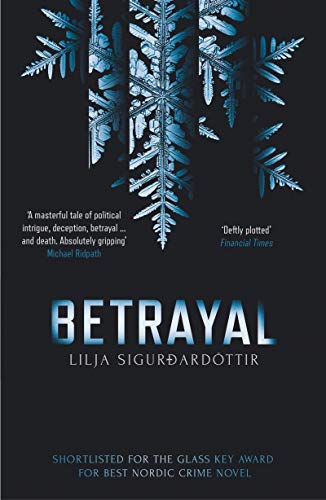
Betrayal by Lilja Sigurdardóttir—A complex story, impossible to second-guess, which reveals that the human heart can be as dark and frozen as the Icelandic landscape.
Sigurðardóttir takes you slowly to the top of the roller coaster before the bottom drops out and you free fall towards a conclusion you never see coming.
Burned out and traumatised by her horrifying experiences around the world, aid worker Úrsula has returned to Iceland. Unable to settle, she accepts a high-profile government role in which she hopes to make a difference again.
But on her first day in the post, Úrsula promises to help a mother seeking justice for her daughter, who had been raped by a policeman, and life in high office soon becomes much more harrowing than Úrsula could ever have imagined. A homeless man is stalking her – but is he hounding her, or warning her of some danger? And why has the death of her father in police custody so many years earlier reared its head again?
As Ursula is drawn into dirty politics, facing increasingly deadly threats, the lives of her stalker, her bodyguard and even a witch-like cleaning lady intertwine. Small betrayals become large ones, and the stakes are raised ever higher.
Betrayal is the third of Icelandic author Lilja Sigurðardóttir’s novels I’ve read. The title of this standalone perfectly fits the story she tells as betrayal is the book’s overarching theme that we find saturates the narrative on many levels.
When front-line international aid worker, Úrsúla Aradóttir, returns home to Iceland, exhausted and traumatized by her horrifying experiences abroad, she tries to reconnect to her husband and children and find normalcy. A one-year, high-profile government appointment seems to offer Úrsúla the chance to continue making a difference in the world while she struggles to come to grips with her difficult past. But the moment she assumes the position as interior minister, the role thrusts Úrsúla into a vortex of dirty politics, police corruption, and deadly threats. Small betrayals become large ones, and the stakes rise quickly to life and death proportions.
In Úrsúla Aradóttir, Sigurðardóttir once again offers us a strong, flawed, and sometimes-unlikable female protagonist. While we can quickly sympathize with her after learning of a myriad of horrific past experiences she tries to come to grips with, Úrsúla has some glaring character imperfections that at times make her appear weak, selfish, and sometimes downright unlikeable. These character weaknesses culminate in Úrsúla betraying her devoted husband, Nonni, which puts both her marriage and family at risk.
Unfortunately, even though we understand what explains Úrsúla’s bad behavior, that doesn’t justify it. And, predictably, Úrsúla’s weaknesses come back to haunt her in the end.
Of course, strong but flawed and sometimes-unlikable female characters are part of Sigurðardóttir’s magic in crafting characters that appear all too real. The flaws are always unique, not the clichéd variety we often find in other novels’ characters. It seems a bit weird to say it when speaking of fictional novel characters. Still, Sigurðardóttir has this incredible and unusual gift for offering readers windows into the very souls of her characters, making them appear extraordinarily real. After reading Betrayal, you feel almost certain that if you traveled to Iceland and looked hard enough, you would undoubtedly find a living, breathing Úrsúla Aradóttir. We could say the same about some of the other primary supporting characters.
Úrsúla isn’t by any means the only absorbing character in the book. I found Stella, an immigrant, witch-like office cleaner, Gunnar, Úrsúla’s driver and self-appointed bodyguard, and Pétur, a homeless guy having a history with Úrsúla, equally fascinating. And that’s just to name a few.
I truly admire Lilja Sigurðardóttir’s writing because her novels have a serious, socially significant heft coupled with her confident narratives. In Betrayal, beyond the smartly crafted plot, Sigurðardóttir nimbly tackles real-world social and cultural issues like dirty politics, police corruption, immigration policy, lesbian and gay culture, and misogyny. It’s one of the things that makes her writing feel so unusually textured and cinematic. Though they are works of fiction, Sigurðardóttir’s books never fail to teach me something, not only about Iceland but about life in general. That makes her novels even more compelling reads.
Each of the three Sigurðardóttir’s novels I’ve read thus far have individual strengths, but as much as I liked and enjoyed the previous two, I think it fair to say that Betrayal is my favorite. It is a complex story, impossible to second-guess, revealing that the human heart can be as dark and frozen as the Icelandic landscape. Of course, I plan to read much much more from Sigurðardóttir. I’d recommend you do likewise.
I purchased the copy of the book used for this review, representing my honest and unbiased opinions.
Letty Davenport, the brilliant and tenacious adopted daughter of Lucas Davenport, takes the investigative reins in the newest thriller from #1 bestselling author John Sandford.
By age twenty-four, Letty Davenport has seen more action and uncovered more secrets than many law enforcement professionals. Now a recent Stanford grad with a master’s in economics, she’s restless and bored in a desk job for U.S. Senator Colles. Letty’s ready to quit, but her skills have impressed Colles, and he offers her a carrot: feet-on-the-ground investigative work, in conjunction with the Department of Homeland Security.
Several oil companies in Texas have reported thefts of crude, Colles tells her. He isn’t so much concerned with the oil as he is with the money: who is selling the oil, and what are they doing with the profits? Rumor has it that a fairly ugly militia group—led by a woman known only as Lorelai—might be involved. Colles wants to know if the money is going to them, and if so, what they’re planning.
Letty is partnered with a DHS investigator, John Kaiser, and they head to Texas. When the case quicky turns deadly, they know they’re on the track of something bigger. Lorelai and her group have set in motion an explosive plan . . . and the clock is ticking down.
It isn’t easy to write a review of a John Sandford novel without gushing superlatives, but I’ll do my best to remain professional. I’ve been a dedicated Sandford fan since reading Rules of Prey, the first book in the bestselling Lucas Davenport Prey series. While the Prey series remains my favorite, I also have read and enjoyed every novel in the Kidd and Virgil Flowers series.
We all have favorite authors whose passion for writing seemed to wane once they had written a few bestsellers, earned a lot of money, and became household names. The prolific John Sandford, with over forty bestsellers, is not one of those authors. He continues to pour his best efforts and considerable writing skills, honed to a razor-sharp edge during his days as a journalist, into every book. Sandford has never written a bad book, in my estimation. The Investigator is no exception. His writing is as crisp and fresh as ever.
On the verge of quitting her boring, low-ranking senatorial assistant and researcher job, twenty-four-year-old Letty Davenport reconsiders when her boss, Senator Christopher Colles, offers her a new position. She is to become his liaison to the Homeland Security IG’s office, complete with DHS credentials and a gun carry permit. With the change in assignment, Letty partners with DHS agent John Kaiser, a former Delta operator, and veteran of multiple combat tours. The pair travel to West Texas to investigate crude oil thefts from some Permian Basin producers. Their objective is not to bust the oil thieves, a matter for local law enforcement, but to determine what the crooks are buying with the oil money. But after stumbling onto a double homicide, Davenport and Kaiser find themselves up against heavily armed, ruthless members of a far-right militia group led by a shadowy woman who goes by the nom de guerre, Jael. After uncovering that the militia group has got their hands on stolen military explosives and seems bent on pulling off some kind of terrorist attack, Letty and her partner must find a way to stop them before there is a mass casualty event.
When I learned that John Sandford had written the first novel in a new series featuring Letty Davenport, I couldn’t wait to read it. Imagine how thrilled I was to get my hands on an advance copy from the publisher more than seven months before its release. The hardest part of being a John Sandford fan has always been waiting impatiently for the next book to come out.
Letty Davenport, the adopted daughter of Lucas and Weather Davenport, first appeared at age twelve in Sandford’s Naked Prey, the fourteenth novel in the Prey series. When a crooked cop murdered the then Letty West’s alcoholic mother leaving her orphaned with no family to take her in, Lucas and his wife became her legal guardians and later adopted her. I’ve liked the Letty character ever since. Even as a twelve-year-old, due to her difficult upbringing, Letty was always been smart and tough as nails. Every Prey novel since Naked Prey has mentioned Letty, and she has been a key supporting character in some. So it seemed almost inevitable that once Letty reached adulthood, like prominent Prey series character Virgil Flowers, she would eventually star in a series spinoff of her own. Enter The Investigator.
Filled with suspense, rich characterization, and the exceptional drama that are hallmarks of Sandford’s writing, this is one of his best novels yet. Fans of the Prey series will know that Letty and Lucas are kindred spirits.
After Letty once shot and killed two intruders who broke into the Davenport home intent on killing the family, Weather told her daughter, seemingly unaffected by the killings, that she was almost exactly like her father—that they both made very cold judgments about people, about their worth, and didn’t cut them any slack. But when Lucas heard about the conversation, he assured Letty that they weren’t psychos or sociopaths who killed without remorse. Instead, he explained that they were “pragmatists—really harsh pragmatists” willing to do what must be done. So, unsurprisingly, in The Investigator, Letty Davenport proves a near-perfect archetype of her father, Lucas. That’s one of the things I liked most about the novel. Unfortunately, as painful as it is to accept, Lucas Davenport is getting old for a credible law enforcement officer after thirty-one books. We must assume that the Prey series is likely approaching its logical conclusion. This series will make a worthy replacement.
While I was already well acquainted with Letty Davenport, the reader doesn’t need to have read a single Prey novel to enjoy this book. Using effective flashbacks, Sandford tells us all we need to know about Letty—her difficult childhood, her adoption, character, and worldview. Even those who might pick up this book as their first John Sandford novel won’t be lost because of unknown past backstory.
Besides Letty, I also truly liked the John Kaiser character, her partner. He reminds me a good bit of Bob Mattes, a deputy marshal with the U. S. Marshal’s Special Operations Group, a gregarious and pivotal character (and a personal favorite) in several of Lucas Davenport’s past adventures in the Prey series.
As we’ve come to expect, Sandford paints for us some interesting, ruthless, and realistic antagonists that we’re eager to root against as John bounces them off of Letty and Kaiser. As usual, he uses multiple points of view so that we not only understand who the bad boys and girls are but what they intend to do and why.
What I think made the plot particularly interesting and realistic is that Sandford chose the circumstances on which to create it based on two things most of us are well familiar with—far-right militias (think ex-Army soldier and domestic terrorist Timothy McVeigh and the Branch Dravidian religious cult), and immigration which the current southern border crisis has thrust back into the center of public debate with the unprecedented numbers of migrants entering the country. The author features both themes prominently in this novel.
If you are a crime thriller enthusiast, especially a John Sandford fan, you won’t want to miss The Investigator. I can’t recommend it enough. I didn’t read it in one sitting as I started the book late one afternoon. While I hated to put it down, I didn’t finish it until the following morning. Still, at 400 pages, it’s a fast read. Having watched the video of a recent John Sandford interview, I knew his editor told him the ending seemed flat and recommended a re-write. Evidently, the author punched it up marvelously since I found the ending very satisfying. In no small measure, that is because the ending seems to promise this isn’t the last Letty Davenport novel.
The Investigator, published by G. P. Putnam’s Sons, an imprint of Penguin Random House LLC, will be available from April 12, 2022.
As I mentioned at the start, I received an advance copy of the book from the publisher via NetGalley used for this review, representing my honest and unbiased opinions.